CAS ETH in Applied Automation Technology

In brief: The CAS ETH in Applied Automation Technology
Automatic control is the hidden science that enables most modern technologies. We provide professionals with a targeted education in automation, feedback control, and machine learning.
Programme Description
The CAS ETH in Applied Automation Technology offers an overview of the role of control and automation in modern technologies, infrastructures, and engineering systems. We start from the fundamental feedback control scheme, discuss modern techniques such as model predictive control and system identification, and we introduce model-free methods like reinforcement learning and data-enabled predictive control. Given the ubiquitous nature of control, throughout the course we showcase examples from various disciplines.

The CAS ETH in Applied Automation Technology is composed of 6 modules over the span of 14 weeks, taught on Fridays (full day) and Saturdays (half day) every two weeks, to minimize the time off work.
The course will include the application of case studies, hands-on exercises, moderated group discussions, and guest talks, as well as an excursion and public networking events.
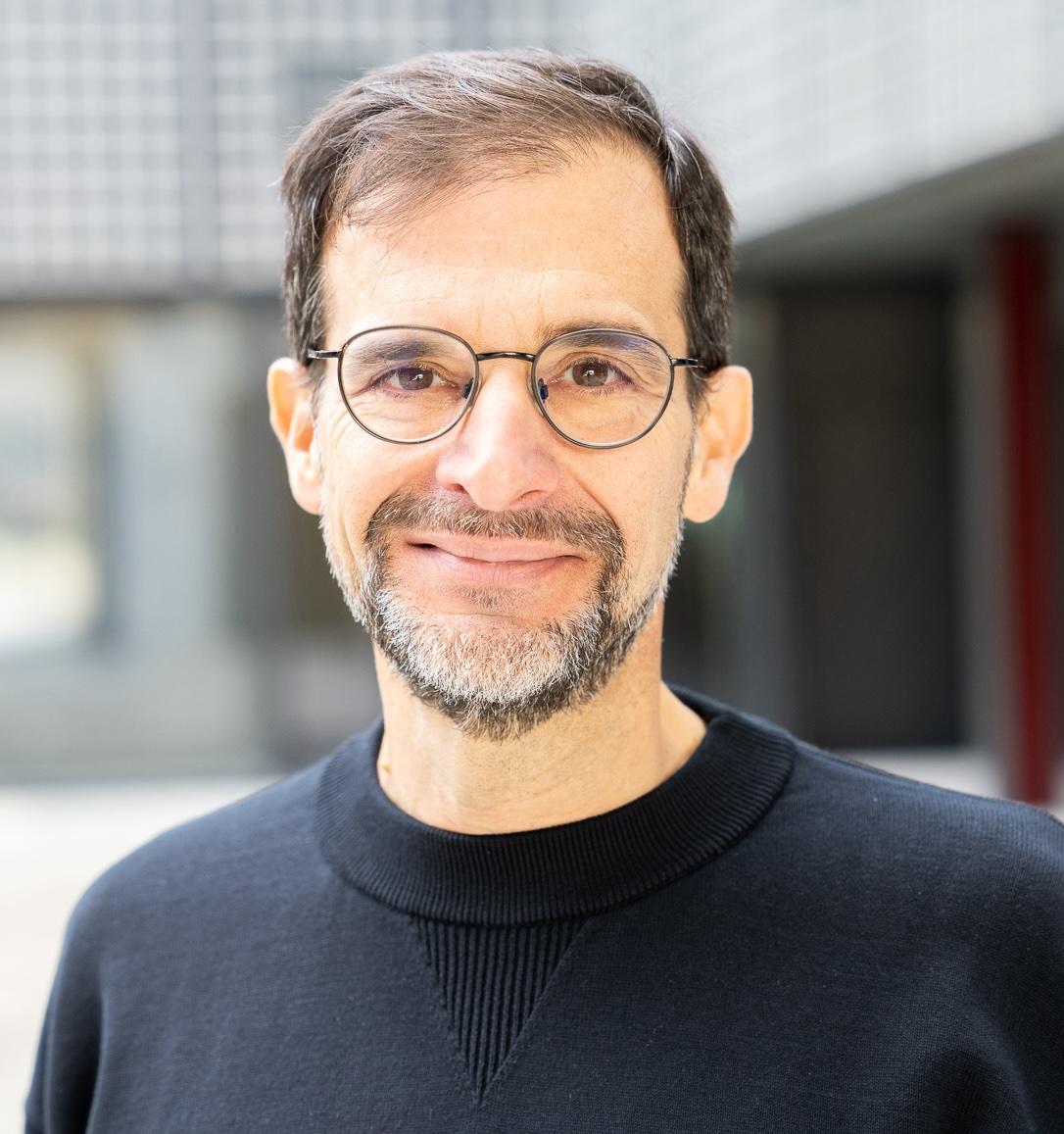
Prof. John Lygeros
This first module serves as an introduction to the topics of systems theory and automatic control. We start with a brief overview of the role of control theory throughout history and up until current times. The participants will realize the fundamental importance of such hidden science that enables the vast majority of modern technologies and infrastructures. We focus the attention on the fundamental control scheme, the role of feedback, and we discuss how mathematics can be used to model physical systems via differential equations.
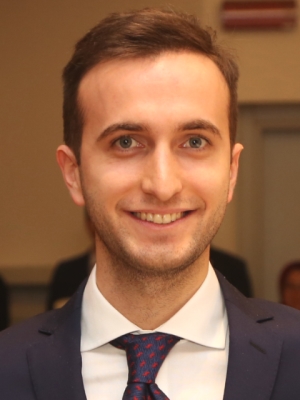
Dr. Andrea Martinelli
Dynamical systems are essentially mathematical models that are used to describe reality, from robotic arms to infectious diseases to human decision making. In this module, we explore the most important aspects of dynamical systems, such as solutions, equilibria, stability, controllability, and observability. From an practitioner/engineering perspective, all of these properties constitute the fundamental bulding blocks that are used to design automatic controllers, i.e., that automatically regulate the behaviour of the system.
Prof. John Lygeros
In this module we leave the domain of analysis and modelling, and enter the domain of control. The objective of a controller is to gather information on the state of the system (from the sensors) and turn it into corrective actions (via the actuators). By designing smart controllers, we can guarantee the system automatically behaves in a desired manner and performs required tasks. In this first control-oriented module, we discuss the difference between open-loop and closed-loop control, and explore the intuitions behind the Proportional, Integral, and Derivative action of the PID controller.
Dr. Andrea Martinelli
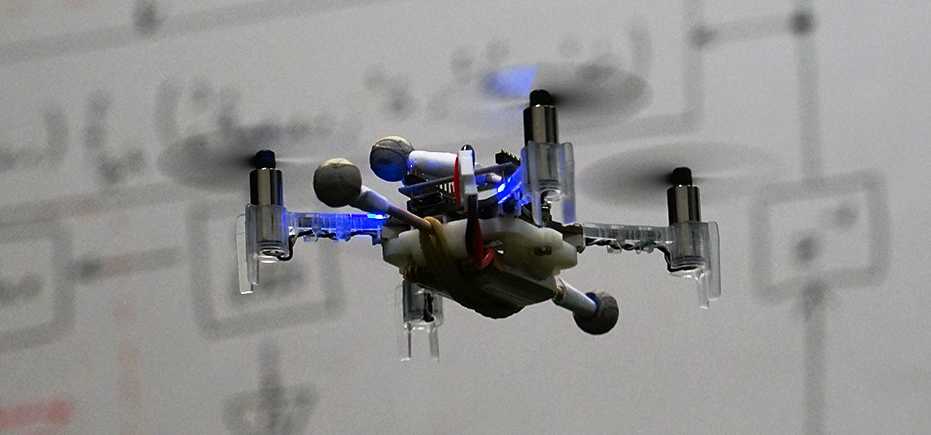
Real world control problems are often complex, saftety-critical, and performance oriented. That's why PID control alone might not be enough to guarantee performance and satisfy requirementes, and needs to be complemented by more sophisticated algorithms. In this module we explore modern control techniques that are the industry gold standard in several domains. We first introduce the general framework of optimal control, where optimization tools are used to maximize performance and minimizing costs. Model Predictive Control (MPC) is a powerful formulation to design fast on-line controllers which can handle constraint satisfaction for safetey guarantees. Finally, to break down the complex interactions and reduce the computatonal power needed to tackle large-scale problems, we discuss multiagent control systems.
Prof. John Lygeros
Besides complexity, another aspect is crucially important and needs to be addressed with the right tools: uncertainty. The mathematical models we build might not be sufficiently accurate to represent real world behaviour, the information gathered by the sensors might be affected by noise, the corrective actions we plan via the actuators might be delayed more than we expect. To cope with these practical considerations and many more, we introduce widely-used methods such as system identification, state estimation, and robust control.
Dr. Andrea Martinelli
Perhaps the largest revolution in recent history of systems and control has been the development of data-driven and reinforcement learning methods. Data pervade each and every corner of most industries and represent an extremely valuable asset. We show how to make the most use of data to design smart controllers that optimize performance and satisfy safety requirements. We introduce the most relevant reinforcement learning techniques and introduce the recent theory of data-enabled predictive control.

Target group and admission
Target group
Individuals or professionals with an interest in the topics of automation and control, from theoretical aspect to applications spanning energy systems, transportation, biomedical systems, industrial processes, and much more.
Requirements
Master's degree acknowledged by ETH or an equivalent educational qualification and at least 3 years of working experience. No technical background is required.
Required Language Skills
English: C1 – external page external pageShow proficiency scales
Dates and Venue
The next CAS ETH in Applied Automation Technology will be offered in the Fall Semester 2026
Start: 18 September 2026
End: 12 December 2026
Application period:
from 1 April to 1 July 2026
Location:
ETH Zurich, Zentrum Campus
Finance
Programme Fee: CHF 8,500
Application Fee:
CHF 50 for persons with a Swiss university degree, CHF 150 for persons with another university degree (non-refundable, credit card payment only)
Withdrawal Fee:
Within 30 days after the admission date: free of charge
More than 30 days after the admission date: CHF 4,250
After the start of the programme: CHF 8,500
Contacts
Institut für Automatik
Physikstrasse 3
8092
Zürich
Switzerland
Head of Automatic Control Laboratory
Institut für Automatik
Physikstrasse 3
8092
Zürich
Switzerland